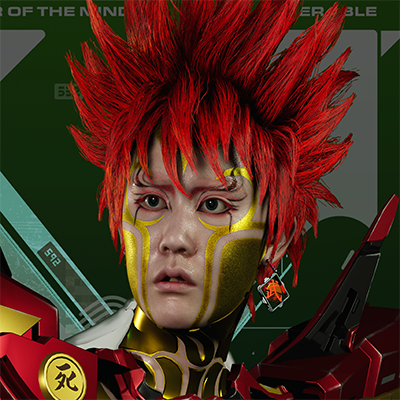
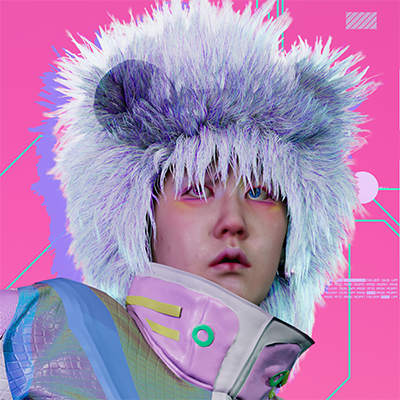
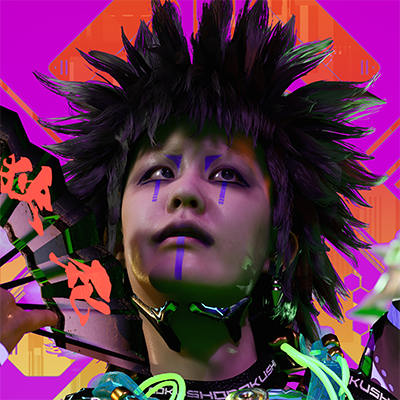
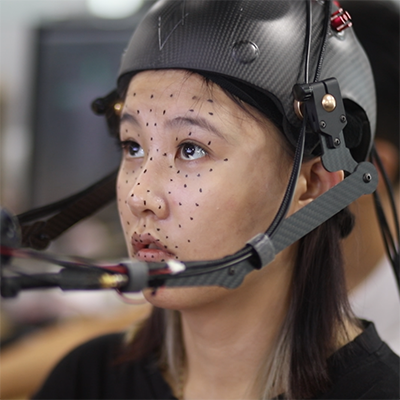
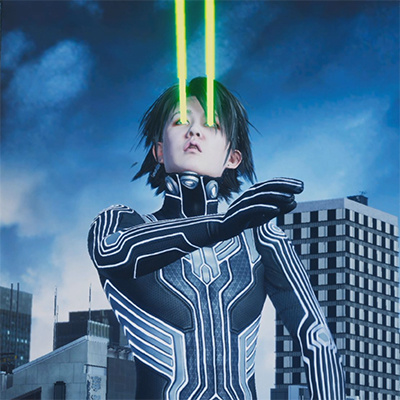
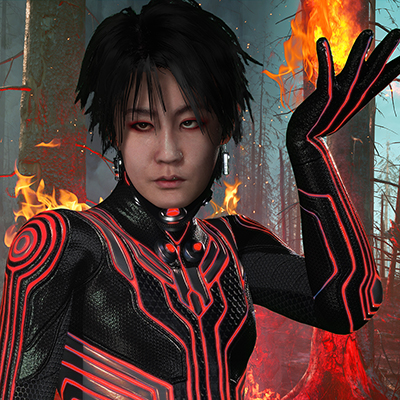
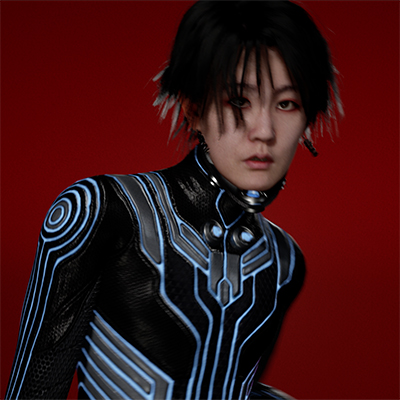
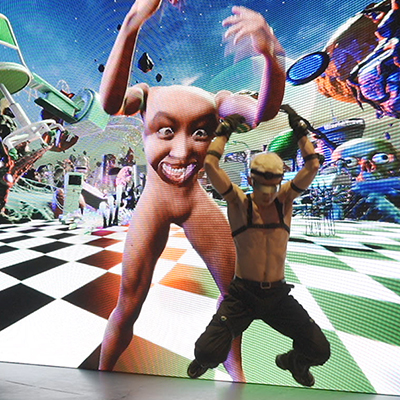
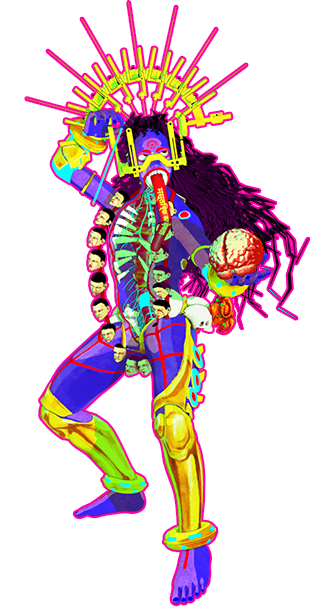
LuYang’s Solo Exhibition “陸揚地獄!LuYang Hell ! Lu Yang Jigoku!” Coming soon !
Posted: October 6th, 2010 | Author: admin | Filed under: 陸揚地獄 | 4 Comments »
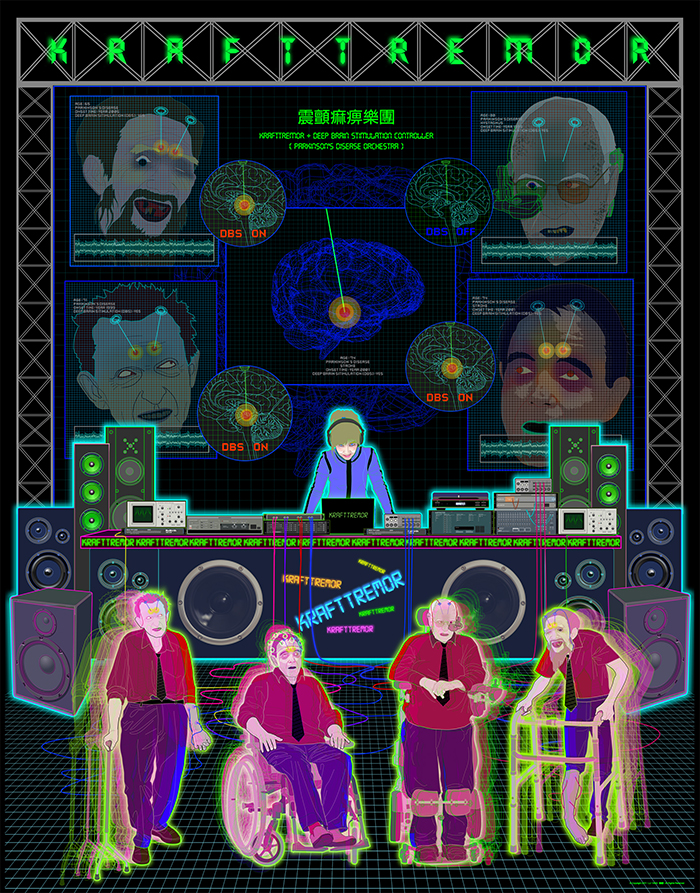
The same name as LuYang’s blog “陸揚地獄“ ,Lu Yang’s next solo show ! Art Labor 2.0 ! Please pay attention !

Narrating the Cruelty of Youth: the Bio-Cybernetic Art of Lu Yang
by Dajuin Yao
Open Media Lab, China Academy of Art
Lu Yang, an immensely powerful pretty little girl.
Just like this seeming oxymoron, her art is at once cute, cruel, impish, pedantic, sober, and ecstatic. It’s conflicting, schizophrenic. It’s beyond comprehension, or so it seems.
No doubt, control is what Lu Yang’s art is about. Machine/animal control, machine/corpse control, human/machine control, machine/human control, human/human control. Yet, at the core of this control hierarchy is mind control. Behind, or perhaps inside, these unnamable cybernetic systems by this highly original artist (by either domestic or international standards) hides a consciousness entity that is sensitive and playful in the extreme – an advanced consciousness that far exceeds her age, length, and wingspan. Those textbook-like cold, sanitized dissection charts and diagrams are merely her bonnets, wigs, and fake eyeglasses – veils that she slaps on everyday to disguise her prettiness.
What she works with is the fundamental method in cybernetic art. Her works are often sadistic/masochistic biological or bionic control systems. And each organism or had-been organism is, in turn, a complex organic system in itself, a custom function in programming language. Each work is a complete cybernetic algorithm, with the artist being the programmer who alone determines the life or death, happiness or pain of the subjects. Yet, beneath the clean, rational, and humorous faux skin of this system is hidden a reversal of roles; sadism or masochism, mutilation or self-mutilation are impossible to distinguish. What is certain is a mental satisfaction built on physical pain. What is certain is that the artist also goes through the same psychological cycles that the subjects of her experiments do.
Of course, the “control” here is also a “complex” – the Mandarin word for “control” and the abbreviation for the Japanese Romanization of “complex” (fetish), or “con,” being homophones. It is a “curiosity-con” of all kinds of body taboos, a “challenge-con” of the audience’s moral bottom line, a “youth-con” trying to seize the last days of one’s youth, and the “life/death-con” resulting therefrom. It is even a highly self-reflexive “meta-control-con.”
However, this “control-fetish” is not as jarring as it may sound. While most artists today are busy controlling the art market, the curators, and the collectors, Lu Yang, on the other hand, favors to immerse herself in the rehearsals of her little animal ballet dance company, or the electronic orchestra of her small creatures. So, it’s really all just a macro-micro matter of scale.
Lu Yang is herself a laboratory. She conducts experiments in classical conditioning and operant conditioning in behavior psychology using creative fantasy and computer software. She is a literal “Survival Research Laboratory,” for the danger of unknown survival rates is an inherent component of her art.
The crucial flavor of her works is also a trademark aberrant humor mixing violence, clowning, absurdity, pessimism, and naughtiness. And what’s not spelled out in the works is also the philosophers’ dialectic of free will and complete fatalism.
But, the roles of, and the power structure between, the controller and the controlled are never as simplistic as they seem. There are no completely enclosed systems of control, or power; all systems are open on a macro level. Just like the tri-sahasra-maha-sahasra-loka-dhatu, a great chiliocosm, in the Buddhist cosmological system. Just like the behavior psychologist B.F. Skinner, who thought he was successfully controlling the pigeons and gamblers with human logic and wisdom, and yet, at the same time, was infected with the physical behavior patterns of the subjects of his experimentation, and was in fact himself being driven by a reward cycle.
And so, at this very moment, the artist, who has been skinned alive, lies on the dissection table, its sciatic nerves being punctured by the critic’s Apple Macintosh electronic stylus… its two legs twitching uncontrollably… with proportional springing and milliseconds of precision delay, the Bezier vector outlines of its ten toes and eight webs bouncing, trembling…
Narrating the Cruelty of Youth: the Bio-Cybernetic Art of Lu Yang
by Dajuin Yao
Open Media Lab, China Academy of Art
Lu Yang, an immensely powerful pretty little girl.
Just like this seeming oxymoron, her art is at once cute, cruel, impish, pedantic, sober, and ecstatic. It’s conflicting, schizophrenic. It’s beyond comprehension, or so it seems.
No doubt, control is what Lu Yang’s art is about. Machine/animal control, machine/corpse control, human/machine control, machine/human control, human/human control. Yet, at the core of this control hierarchy is mind control. Behind, or perhaps inside, these unnamable cybernetic systems by this highly original artist (by either domestic or international standards) hides a consciousness entity that is sensitive and playful in the extreme – an advanced consciousness that far exceeds her age, length, and wingspan. Those textbook-like cold, sanitized dissection charts and diagrams are merely her bonnets, wigs, and fake eyeglasses – veils that she slaps on everyday to disguise her prettiness.
What she works with is the fundamental method in cybernetic art. Her works are often sadistic/masochistic biological or bionic control systems. And each organism or had-been organism is, in turn, a complex organic system in itself, a custom function in programming language. Each work is a complete cybernetic algorithm, with the artist being the programmer who alone determines the life or death, happiness or pain of the subjects. Yet, beneath the clean, rational, and humorous faux skin of this system is hidden a reversal of roles; sadism or masochism, mutilation or self-mutilation are impossible to distinguish. What is certain is a mental satisfaction built on physical pain. What is certain is that the artist also goes through the same psychological cycles that the subjects of her experiments do.
Of course, the “control” here is also a “complex” – the Mandarin word for “control” and the abbreviation for the Japanese Romanization of “complex” (fetish), or “con,” being homophones. It is a “curiosity-con” of all kinds of body taboos, a “challenge-con” of the audience’s moral bottom line, a “youth-con” trying to seize the last days of one’s youth, and the “life/death-con” resulting therefrom. It is even a highly self-reflexive “meta-control-con.”
However, this “control-fetish” is not as jarring as it may sound. While most artists today are busy controlling the art market, the curators, and the collectors, Lu Yang, on the other hand, favors to immerse herself in the rehearsals of her little animal ballet dance company, or the electronic orchestra of her small creatures. So, it’s really all just a macro-micro matter of scale.
Lu Yang is herself a laboratory. She conducts experiments in classical conditioning and operant conditioning in behavior psychology using creative fantasy and computer software. She is a literal “Survival Research Laboratory,” for the danger of unknown survival rates is an inherent component of her art.
The crucial flavor of her works is also a trademark aberrant humor mixing violence, clowning, absurdity, pessimism, and naughtiness. And what’s not spelled out in the works is also the philosophers’ dialectic of free will and complete fatalism.
But, the roles of, and the power structure between, the controller and the controlled are never as simplistic as they seem. There are no completely enclosed systems of control, or power; all systems are open on a macro level. Just like the tri-sahasra-maha-sahasra-loka-dhatu, a great chiliocosm, in the Buddhist cosmological system. Just like the behavior psychologist B.F. Skinner, who thought he was successfully controlling the pigeons and gamblers with human logic and wisdom, and yet, at the same time, was infected with the physical behavior patterns of the subjects of his experimentation, and was in fact himself being driven by a reward cycle.
And so, at this very moment, the artist, who has been skinned alive, lies on the dissection table, its sciatic nerves being punctured by the critic’s Apple Macintosh electronic stylus… its two legs twitching uncontrollably… with proportional springing and milliseconds of precision delay, the Bezier vector outlines of its ten toes and eight webs bouncing, trembling…